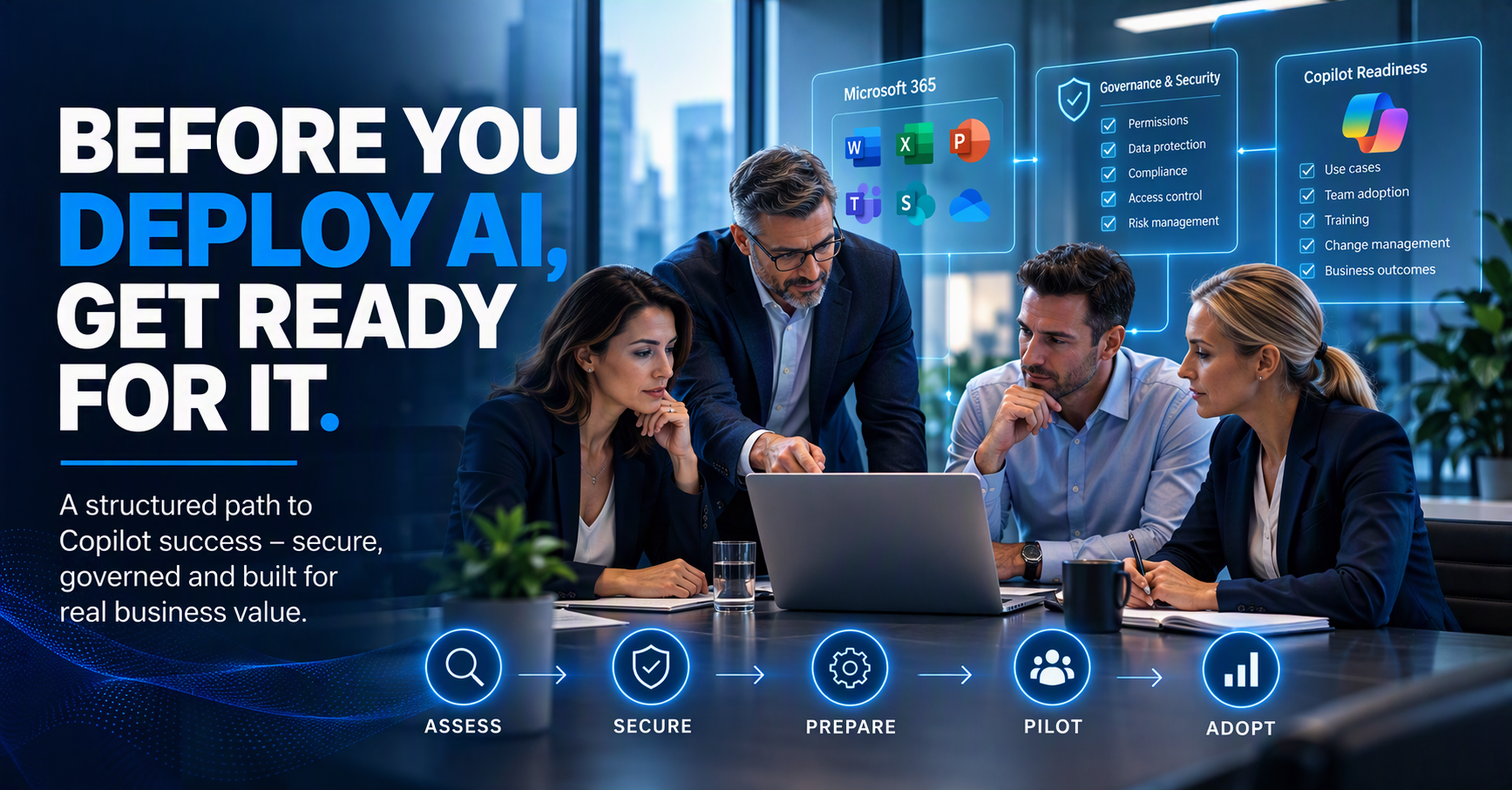
The rise of AI has sparked a revolution, captivating industry giants and smaller enterprises alike with its endless possibilities. In this blog, we will explore the power of AI in unleashing business potential while also addressing its potential risks. AI’s ability to swiftly decipher massive data sets and provide valuable insights empowers businesses to make well-founded decisions. Automation capabilities boost productivity by freeing employees from mundane tasks, while the agility of AI enables swift reactions to evolving scenarios. However, it’s crucial to remain vigilant as AI algorithms can also be exploited by cybercriminals for nefarious purposes. From AI-powered phishing scams to ultra-realistic deepfakes, these risks emphasise the need for proactive cybersecurity measures. Our aim is to guide businesses in harnessing AI’s strengths while mitigating its potential pitfalls, ensuring a successful and secure integration of AI in the business world.
Harnessing the Power of AI in Business
Leveraging AI for Smart Data Analysis
AI’s prowess in data analysis is unrivalled, especially when it comes to making sense of complex information. By implementing AI, businesses can quickly sift through vast quantities of data, identify patterns, and extract actionable insights. This is particularly useful in understanding customer behaviour, market trends, and operational efficiency. AI algorithms can predict customer needs, streamline inventory management, and even forecast market changes with impressive accuracy. Moreover, AI systems continually learn and improve over time, providing businesses with an evolving toolset that grows in precision and utility. This smart data analysis not only informs strategic decision-making but also offers a significant competitive advantage. As a result, companies that leverage AI for data analysis are often more agile and responsive to market demands, setting them up for long-term success.
Boosting Productivity with AI Automation
AI is revolutionising the way businesses operate by automating routine tasks, thus freeing up employees to focus on more strategic work. Automation through AI can take over repetitive and time-consuming tasks such as data entry, scheduling, and even customer service inquiries. This shift not only enhances efficiency but also reduces human error. Employees benefit from AI as it allows them to engage in more meaningful and creative tasks, boosting job satisfaction and productivity. Moreover, AI-driven automation provides a scalable solution that can adapt to increased workloads without the linear increase in costs associated with hiring more staff. For businesses, this means being able to do more with less, driving down operational costs while increasing output. Ultimately, AI automation is a key driver in achieving leaner, more efficient, and more innovative business operations.
Agility: Keeping Pace with AI in Business
In today’s fast-paced business environment, agility is key, and AI is a crucial enabler of this adaptability. With AI, businesses can quickly respond to market shifts, customer feedback, and operational challenges. This rapid response capability is underpinned by AI’s real-time data processing and predictive analytics, which allow businesses to anticipate changes and react before they become problems. AI systems also enable businesses to test new strategies in virtual simulations, reducing the risk and cost associated with trial and error in the real world. By adopting AI, companies can evolve their products and services at a speed that matches the ever-changing market demands. In essence, AI doesn’t just keep businesses on pace; it sets the pace, giving those who harness its power a clear advantage in innovation and responsiveness.
Understanding the Risks: AI’s Cyber Challenges
AI-Powered Phishing Scams: Stay Alert
The sophistication of phishing scams has escalated with the advent of AI. Cybercriminals are now using AI to craft and send highly personalised messages that are difficult to distinguish from legitimate communications. These AI-powered scams mimic the style and tone of emails from trusted sources, making it easier to deceive recipients into disclosing sensitive information. To stay ahead, businesses must invest in advanced threat detection systems that can identify and neutralise such scams before they reach inboxes. Employees should also be trained to recognise the subtle signs of phishing attempts, such as slight inconsistencies in email addresses or unusual requests for information. Vigilance and education are the best defences against these evolving threats, as the human element remains a critical component in cybersecurity. By staying alert and informed, businesses can significantly reduce their vulnerability to these AI-powered deceptions.
The Threat of Malicious AI-Generated Code
The same AI technology that helps programmers write better code can also be misused to create sophisticated malware. Malicious AI-generated code can self-modify, making it harder to detect and remove. These advanced pieces of malware can learn from their environment, adapting to overcome cybersecurity measures. To combat this threat, businesses need to employ AI-driven security solutions that can evolve in tandem with these threats. Security systems must be proactive, not just reactive, using machine learning to predict and prevent attacks before they occur. It’s also essential for businesses to keep their security protocols up to date and conduct regular audits to ensure that their defences are capable of handling the latest AI-generated threats. By taking a forward-thinking approach to cybersecurity, businesses can protect themselves against the ever-growing threat of malicious AI-generated code.
Decoding Deepfakes: AI-Personations and Misinformation
Deepfakes represent a significant escalation in the spread of misinformation. These AI-generated videos or audio recordings are so convincing that they can mimic public figures and influencers to a tee, making it challenging to distinguish real statements from fabrications. The potential for harm is enormous, from sabotaging reputations to manipulating stock prices. Businesses must be proactive in educating their teams about the existence and dangers of deepfakes. Investing in technology that can detect the subtle inconsistencies typical of deepfakes is also crucial. Additionally, it’s important to establish robust verification processes for any sensitive communication purportedly from high-level executives or external partners. By staying informed and employing the right tools, businesses can reduce the risks posed by AI-personations and protect themselves against the spread of misinformation.
Tips for Safeguarding Business from AI Risks
Exercising Caution with AI-powered Communication
In an era where AI-powered communication tools are prevalent, caution is paramount. These tools can generate convincing messages that may appear to come from trusted colleagues or business partners. To safeguard against such risks, businesses should implement strict protocols for verifying the authenticity of messages, especially those that request sensitive information or urgent action. Multi-factor authentication and confirmation through secondary channels, like a phone call, can help verify unusual or unexpected requests. Training staff to be sceptical of unsolicited communications and to recognise the hallmarks of AI-generated content is also crucial. By embedding a culture of caution and providing clear guidelines for communication, businesses can protect themselves from being duped by AI-powered scams.
Strengthening Defenses against Malware and Malicious Code
To shield your business from malware and malicious AI-generated code, a multi-layered security approach is essential. Start by ensuring your antivirus software is robust and up-to-date, capable of detecting and isolating threats. Regularly update all systems and applications to patch vulnerabilities that could be exploited by malware. Employing a firewall and intrusion detection systems will also help monitor and prevent unauthorised access. Additionally, it’s vital to back up data regularly, so you can restore information without paying ransom in the event of a ransomware attack. Conducting cybersecurity awareness training empowers employees to recognise and report potential threats, closing the gap that malware often slips through. By strengthening these defenses, your business can create a resilient security posture capable of withstanding the onslaught of sophisticated malware.
Identifying and Combating Deepfakes in Business
To counter the threat of deepfakes in business, it’s important to develop a keen eye for authenticity and invest in technology designed to spot fakes. Educating employees on the existence and characteristics of deepfakes is a critical first step. They should be taught to look for inconsistencies in video or audio clips and to verify the source before taking any action. Investing in specialised software that analyses videos for signs of manipulation can provide an additional layer of security. It’s also wise to establish rigorous verification processes for any content that could impact business decisions or public perception. By staying informed about the latest developments in AI and deepfake technology, and by employing a combination of training, technology, and processes, businesses can build a strong defense against the malicious use of deepfakes.
Final Word: Striking the Balance Between AI’s Potential and Pitfalls
Benefiting from AI while Mitigating Potential Risks
Embracing AI offers significant advantages, but it’s equally important to be aware of and mitigate its risks. Businesses can benefit from AI by automating processes, gaining insights from data analysis, and enhancing customer experiences. To safely harness these benefits, it’s critical to establish clear AI governance and ethical guidelines. This includes developing transparent AI systems where decision-making processes can be understood and audited. Implementing robust cybersecurity measures to protect against AI-powered threats is also key. By investing in staff training and staying abreast of AI advancements, businesses can use AI to their advantage while maintaining a strong security posture. The goal is to create a balanced approach where AI’s potential is maximised, but its risks are carefully managed and contained.
Preparing for the Future of AI in Business
The future of AI in business is not just about adopting new technologies, but preparing for the transformative changes they bring. Forward-thinking companies are already strategising how AI will shape their industries and planning accordingly. This involves investing in talent with AI expertise and providing ongoing learning opportunities for current staff. It’s critical to engage with stakeholders about AI’s role in your business, including the ethical implications and the impact on employment. Businesses should also start small with AI projects, scale intelligently, and remain agile to adapt to rapid advancements in technology. By staying informed about AI trends and maintaining flexibility, businesses can not only prepare for the future of AI but also shape it to their advantage.
Roles and Responsibilities: AI Safety in the Corporate World
Ensuring AI safety in the corporate world is a shared responsibility. Executives must set the tone, prioritising AI ethics and responsible use within their corporate strategy. IT teams have the task of implementing the technical safeguards that protect against AI-related cyber threats. They must also ensure that AI systems operate within the legal framework, respecting data privacy and other regulations. Meanwhile, every employee has a role to play in maintaining AI safety. They must be vigilant in their interactions with AI-powered systems and report any anomalies. Additionally, companies should consider appointing an AI safety officer to oversee AI deployment and manage associated risks. This role would be responsible for ensuring that AI systems are transparent, equitable, and aligned with the company’s values. By clearly defining roles and responsibilities, businesses can create a culture that supports AI safety and responsible innovation.