
The Anatomy of a Cyber-Ready Business: A Practical Guide for Australian SMEs
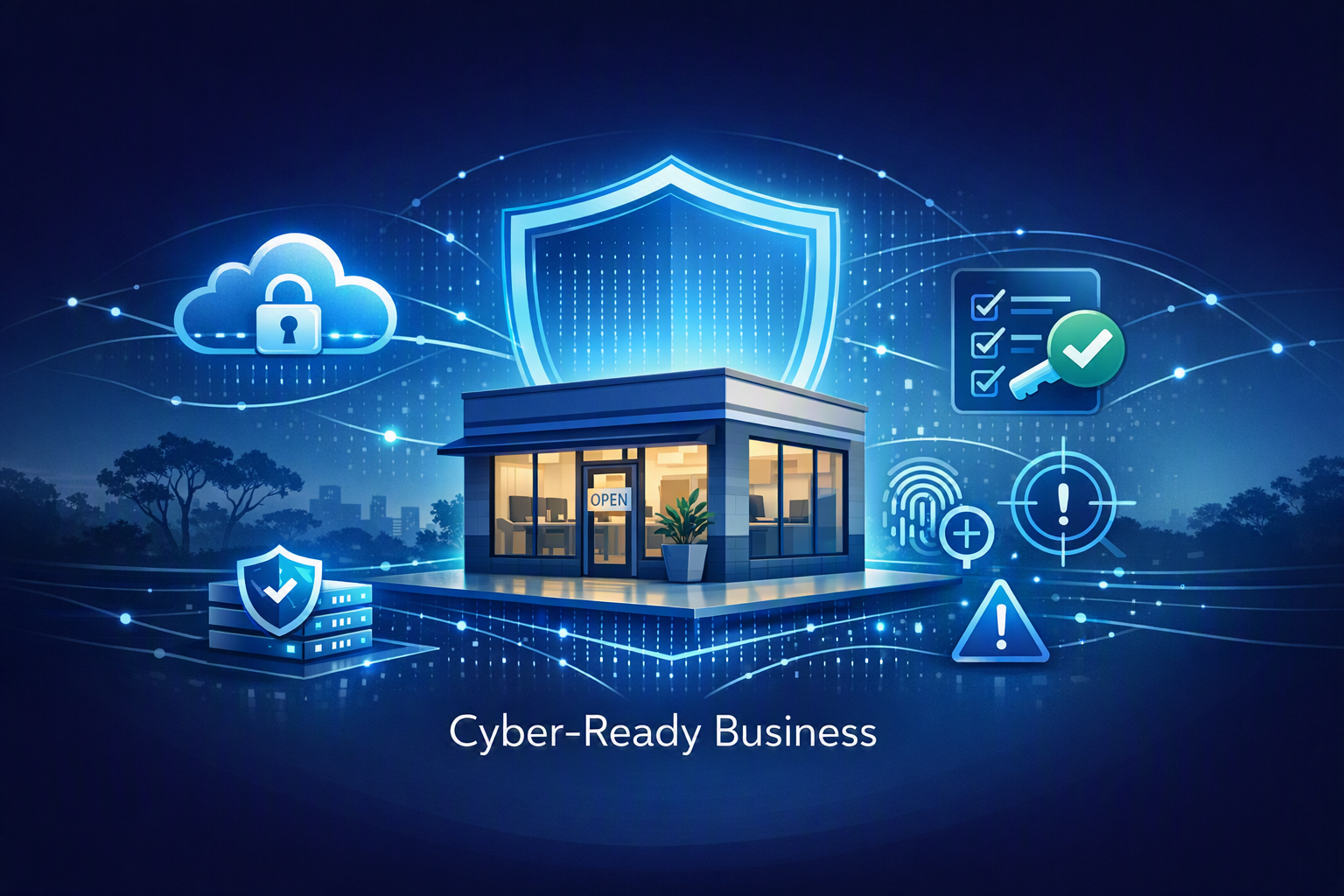
A cyber-ready business is not one that assumes it will never be attacked. It is one that understands its risks, protects its critical systems, trains its people, monitors for unusual activity and has a clear recovery plan. That practical, layered approach is what turns cyber security from a technical headache into a business advantage. What Does Cyber Readiness Mean? Cyber readiness means being prepared before, during and after a cyber incident. It combines prevention, detection, response and recovery so your organisation can keep operating with confidence. For many businesses, this includes everyday controls such as multi-factor authentication, software updates, secure backups, access management, staff awareness training and regular security reviews. 1. Understand Your Cyber Risks Strong cyber security starts with knowing what you need to protect. Identify your most important systems, data, applications and user accounts. This may include client records, financial information, email accounts, cloud platforms, business-critical software and intellectual property. Once you understand what matters most, you can prioritise security controls where they will have the greatest impact. 2. Build Strong Preventative Defences Prevention is the foundation of cyber resilience. Keep operating systems and applications updated, use reputable endpoint protection, enforce multi-factor authentication and limit access to sensitive systems. The Australian Cyber Security Centre recommends the Essential Eight as a baseline set of mitigation strategies to make it harder for attackers to compromise systems. For SMEs, even starting with the basics—MFA, patching and backups—can significantly improve protection. 3. Create a Security-Aware Culture Your people are one of your strongest lines of defence. Staff who can recognise phishing emails, suspicious links, fake invoices and unusual login prompts are far more likely to stop threats early. Regular cyber security awareness training, simple reporting processes and clear guidance help make security part of daily business operations rather than an occasional reminder. 4. Monitor for Suspicious Activity No defence is perfect, which is why monitoring is essential. A cyber-ready business uses tools and processes to detect unusual activity, such as unexpected login attempts, changes to administrator accounts, malware alerts or abnormal network behaviour. The earlier you detect a potential issue, the faster you can contain it and reduce the impact. 5. Plan Your Incident Response and Recovery When an incident happens, confusion costs time. Every business should have a clear cyber incident response plan that explains who to contact, what steps to take and how to keep key operations running. Reliable, tested backups are also critical. Backups should be frequent, protected from ransomware and regularly checked so you know they will work when needed. 6. Review and Improve Continuously Cyber threats change quickly, so cyber readiness is never a one-time project. Review your security policies, user access, backup processes, software patching and staff training on a regular basis. After any incident or near miss, capture the lessons learned and use them to strengthen your defences. Continuous improvement helps your business stay aligned with changing risks, compliance expectations and customer demands. Why Cyber Readiness Matters for Business Growth Cyber readiness is not just about avoiding attacks. It also supports business continuity, customer confidence, regulatory compliance and stronger supplier relationships. Businesses that can demonstrate good security practices are often better positioned when responding to client due diligence requests, renewing cyber insurance, tendering for work or managing sensitive information. Need Help Improving Your Cyber Readiness? If you are unsure where to start, Armour Networks can help assess your current cyber security posture and build a practical roadmap for improvement. From managed IT support and cloud security to vCIO, vCISO and Essential Eight alignment, we help Australian businesses strengthen their defences without overcomplicating the process. Contact us today to book a no-obligation cyber readiness consultation and take the next step towards a safer, more resilient business.
How Smart Tech Budgets Drive Business Growth
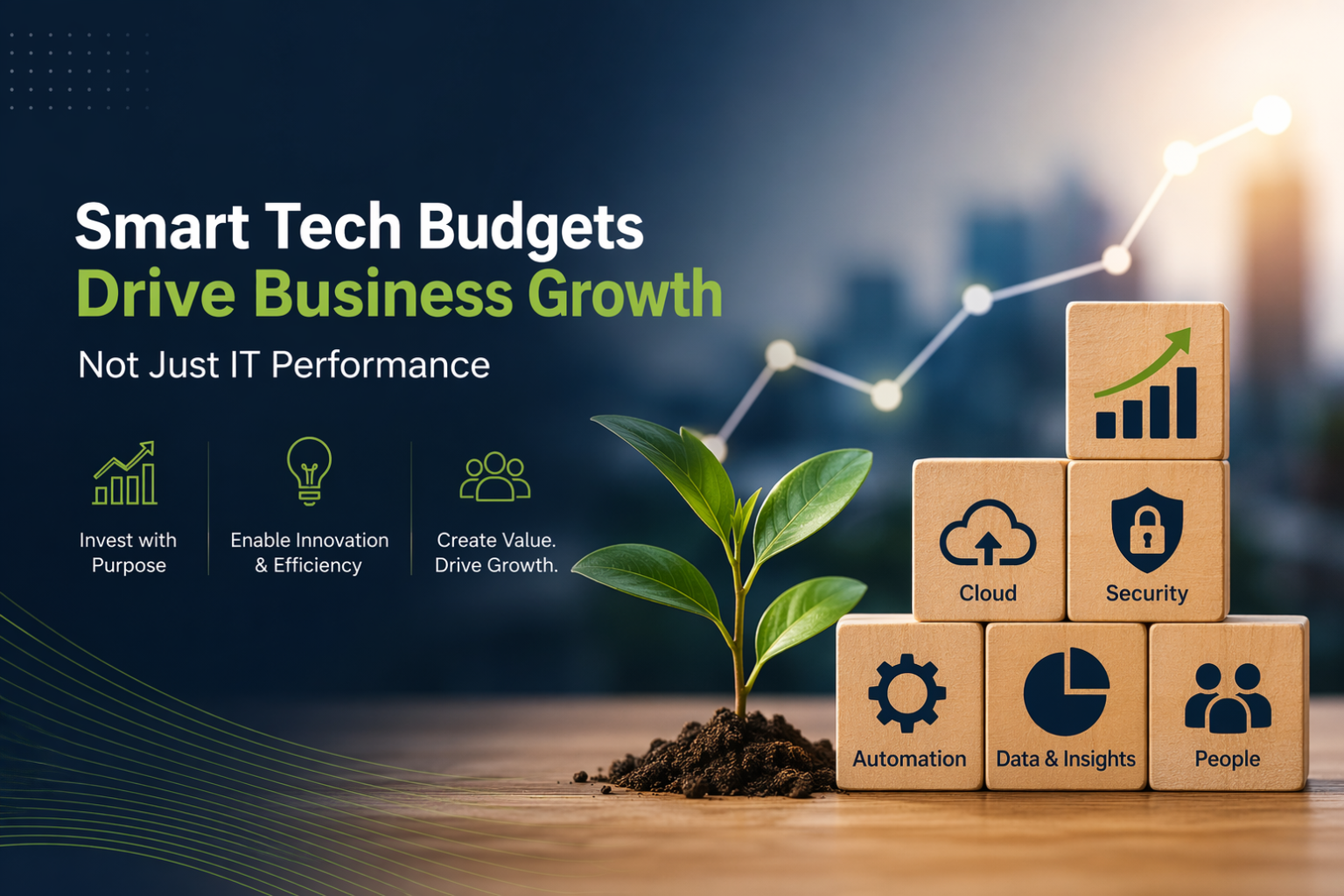
How Smart Tech Budgets Drive Business Growth (Not Just IT Performance) When was the last time your business reviewed its IT budget? For many organisations, it follows a familiar pattern: IT requests funding to maintain, fix or upgrade systems… while leadership sees it as a necessary expense. Something to keep things running—rather than something that actively drives growth. But that mindset is changing. Today, forward-thinking businesses are using their technology budget as a strategic lever—fueling innovation, improving efficiency and gaining a real competitive edge. Let’s explore what’s changed—and how you can take advantage of it. The Old Mindset: IT as a Cost Centre Traditionally, IT spending has been focused on maintaining operations. Keep the lights on. Prevent downtime. Avoid risk. While this approach feels safe, it often creates long-term limitations: Research shows that many organisations still spend the majority of their IT budgets on maintaining existing systems rather than investing in innovation. The result? Businesses fall behind more agile, tech-enabled competitors. The Shift: IT as a Growth Enabler Modern businesses are reframing the conversation. Instead of asking: “Where can we reduce IT costs?” They’re asking: “How can technology help us grow faster, work smarter, and serve customers better?” This shift is critical. Technology is no longer just supporting the business—it is the business. Strategic IT investment now plays a central role in innovation, efficiency, and competitive advantage. When organisations adopt this mindset, they unlock: And importantly, this isn’t just for large enterprises. SMBs that embrace digital transformation can improve productivity, enhance customer experience and scale more efficiently. What Smart Tech Budgeting Actually Looks Like A growth-focused IT budget isn’t about spending more—it’s about spending smarter. Here’s what that looks like in practice: 1. Prioritise High-Impact Initiatives Focus on investments that directly support business outcomes: Organisations that align technology investments with business goals consistently achieve greater efficiency and agility. 2. Reduce Operational Friction Many businesses are slowed down by: Modernisation—through automation, integration, and cloud platforms—removes these bottlenecks, allowing teams to focus on value instead of maintenance. 3. Enable Faster, Smarter Decisions Data is one of your most powerful assets—if it’s usable. By investing in integrated systems and analytics: Data-driven organisations are better positioned to adapt quickly and stay competitive in changing markets. The Business Impact: Real, Measurable Results When your IT budget is tied to strategy—not just support—the benefits ripple across your entire organisation: ✅ Improved Productivity Automation and modern tools reduce manual work, helping teams move faster and with fewer errors ✅ Faster Time to Market Scalable systems allow you to launch new services or products quickly ✅ Better Customer Experience Technology enables personalisation, faster response times, and stronger engagement ✅ Stronger Competitive Position Businesses that invest strategically in technology adapt faster and outperform those that don’t The Bottom Line Smart tech budgets aren’t about spending more on IT. They’re about aligning technology with your business goals—so every dollar drives measurable impact. Because in today’s market, the question isn’t: Can you afford to invest in technology? It’s: Can you afford not to? How Armour Networks Can Help If your IT budget still looks like a list of maintenance costs, it might be time for a reset. At Armour Networks, we help Sydney businesses turn IT from a cost centre into a growth engine: 🚀 Ready to turn your IT into a growth driver? Book your free tech assessment today and discover where smarter investment can take your business.
Digital Drag: The Silent Productivity Killer Holding Your Business Back

Ever feel like your team should be moving faster—but something keeps getting in the way? That friction has a name: digital drag. It’s what happens when your systems, tools, and processes no longer support the pace your business needs. Instead of accelerating growth, they quietly slow everything down—bit by bit, task by task. The tricky part? It rarely announces itself. It builds up over time until simple workflows become frustrating, decisions take longer, and your team spends more energy fighting technology than using it. Let’s break down what’s really going on—and how to fix it. Where Digital Drag Comes From Digital drag doesn’t usually come from a single issue. It’s the result of small inefficiencies adding up across your tech environment. Here are some of the most common culprits: Individually, these might seem manageable. Combined, they create a constant drag on productivity. The Hidden Costs You’re Probably Ignoring Digital drag isn’t just an inconvenience—it’s expensive. And the real cost often sits beneath the surface. In fact, inefficient technology can reduce productivity by as much as 40%, highlighting just how quickly these issues compound. A Smarter Way to Tackle the Problem You don’t need to rip everything out and start from scratch. The key is to be targeted and strategic—focusing on changes that deliver the biggest impact first. Here’s where to start: Even small improvements here can create significant gains. Businesses adopting automation often see measurable productivity boosts and stronger returns on investment. What Happens When You Remove the Drag? When your systems start working with you instead of against you, the difference is immediate. Put simply: fewer bottlenecks, more momentum. How Armour Networks Can Help You don’t need to solve this on your own. At Armour Networks, we help businesses identify exactly where digital drag is hiding—and eliminate it with practical, cost-effective solutions. Here’s how we support you: No overcomplication. No unnecessary spend. Just smarter, more efficient IT that actually supports your business. Ready to Work Faster and Smarter? If your technology feels like it’s holding you back, it probably is. Let’s fix that. Book a meet & greet with us through our website and start turning your IT into a growth driver—not a bottleneck.
7 Cybersecurity Threats That Could Wipe Out Your Business

The dinosaurs didn’t get a warning. One normal day… then everything changed. Today, many businesses operate in a similar mindset—focused on growth, clients, and day-to-day operations—without realising just how close they could be to a catastrophic cyber event. Cyber threats are no longer occasional disruptions. They’re constant, evolving, and increasingly capable of shutting businesses down entirely. Some incidents don’t just slow you down—they can erase years of hard work overnight. In this article, we break down the seven cybersecurity threats that pose a genuine “extinction-level” risk to modern businesses—and what makes them so dangerous. The New Reality: Not All Threats Are Equal Every organisation faces cyber risk. But some threats go far beyond inconvenience. These are the ones that: Let’s look at the biggest ones you can’t afford to ignore. 1. AI-Driven Ransomware: Faster, Smarter, Relentless Ransomware isn’t new—but it’s evolved. Today’s attackers use artificial intelligence to: Gone are the days of generic spam emails. These attacks are targeted, precise, and often devastating. Why it matters:By the time your team detects the attack, it’s usually too late. Operations stop, data is locked, and your business is forced into crisis mode—often within hours. 2. Advanced Persistent Threats (APTs): The Silent Intruders Unlike smash-and-grab attacks, APTs are patient. Attackers infiltrate your systems quietly and stay hidden for weeks—or even months—while gathering sensitive data. They often come from well-funded groups, meaning they: Why it matters:You may not even know you’ve been compromised until critical data is already gone. 3. Supply Chain Attacks: Your Weakest Link Isn’t Internal You might have strong internal security—but what about your vendors? Cybercriminals increasingly target: One vulnerable supplier can open the door to your entire network. Why it matters:Your security posture is only as strong as your least secure partner. Trust without verification is now a major risk. 4. Data Breaches: More Than Just Data Loss A breach doesn’t just expose information—it damages reputation. Often, breaches start with simple mistakes: From there, attackers gain access to sensitive information like: Why it matters:The real cost isn’t just the breach—it’s the fallout: lost clients, regulatory fines, and long-term brand damage. 5. IoT Vulnerabilities: The Hidden Entry Points Modern offices are full of connected devices: Many of these devices: Attackers love them. Why it matters:These seemingly harmless devices can become backdoors into your entire network—without raising immediate alarms. 6. Deepfakes & Social Engineering: When You Can’t Trust Your Eyes Cybercrime is becoming psychological. Attackers are now using AI to: Imagine receiving a call from your CEO urgently requesting a transfer—only it’s not really them. Why it matters:Traditional security awareness isn’t enough anymore. Businesses need stronger verification processes beyond “it sounds legitimate.” 7. Cloud Misconfigurations: One Small Mistake, Big Consequences Cloud platforms offer flexibility—but they also introduce risk. Simple missteps like: …can make sensitive data publicly accessible. Why it matters:These aren’t advanced hacks—they’re preventable errors that attackers actively scan for. Survival Isn’t Luck—It’s Strategy Extinction-level threats aren’t science fiction—they’re happening every day. The difference between businesses that recover and those that don’t usually comes down to preparation, visibility, and response capability. The good news? You don’t have to face this alone. At Armour Networks, we help businesses: Ready to Strengthen Your Defences? Cybersecurity isn’t just an IT issue—it’s a business survival strategy. If you want to understand where your risks are—and how to close the gaps—let’s talk. 👉 Book your no-obligation consultation today and take control of your cyber risk.
The Blueprint of a Cyber-Resilient Business

Cyber threats aren’t just headlines anymore—they’re part of everyday business risk. Whether you’re a growing firm or an established organisation, the digital landscape brings constant challenges that can disrupt operations and damage trust overnight. The good news? Becoming cyber-ready doesn’t mean massive budgets or complex systems. It’s about building smart habits, putting the right controls in place, and creating a culture that strengthens your business from the inside out. Think of cybersecurity like building a resilient structure—every layer plays a role, and together they create something strong, adaptable, and ready for whatever comes next. Where Cyber Resilience Begins A cyber-ready business isn’t built on a single solution—it’s built on a combination of practical, well-aligned foundations. Here’s what that looks like in action: 🔍 Understand What Matters Most You can’t protect what you don’t fully understand. Start by identifying your most critical data, systems, and processes. These are the assets that keep your business running. Once you know what’s essential, you can prioritise your efforts and reduce unnecessary exposure. Regular reviews are key—threats evolve, and so should your awareness. 🛡️ Strengthen Your Defences Security isn’t just about installing antivirus and hoping for the best. True protection comes from layering your defences: When these elements work together, they create a far more difficult environment for cybercriminals to penetrate. 👥 Make Security Everyone’s Responsibility Your biggest strength—or your biggest vulnerability—can be your people. A team that knows how to spot a phishing email or report something suspicious can stop an attack before it escalates. That’s why cybersecurity needs to be part of your company culture, not just an IT concern. Short, regular training sessions and open communication go a long way in keeping your team alert and confident. 👁️ Stay Alert With Ongoing Monitoring No system is completely immune, which is why visibility matters. By monitoring systems and network activity, you can quickly identify anything unusual. Establishing a baseline of “normal” behaviour makes it easier to flag anomalies early—before they become major issues. Early detection is often the difference between a minor incident and a costly disruption. ⚡ Be Ready to Respond and Recover Preparation turns chaos into control. If an incident occurs, your team should know exactly what to do. A clear response plan, updated contact lists, and regular simulations ensure everyone understands their role when it matters most. Equally important? Reliable backups. They provide a safety net, ensuring your critical data can be restored quickly and downtime is kept to a minimum. 🔄 Keep Improving Cybersecurity isn’t a one-off project—it’s an ongoing process. New threats emerge, technologies change, and your business evolves. Regularly reviewing your approach, updating policies, and learning from real-world incidents will keep your defences sharp and relevant. Continuous improvement is what separates reactive businesses from resilient ones. More Than Security—It’s About Trust When you invest in cybersecurity, you’re not just protecting systems—you’re protecting your reputation, your clients, and your future. Businesses that take cyber readiness seriously build stronger relationships, inspire confidence, and operate with fewer disruptions. Ready to Take the Next Step? Managing cybersecurity can feel overwhelming, especially when you’re juggling day-to-day operations. That’s where having the right partner makes all the difference. At Armour Networks, we help businesses like yours simplify security, strengthen resilience, and stay ahead of evolving threats—without unnecessary complexity. Let’s make your business cyber-ready.Reach out today for a no-obligation consultation and discover how we can help you stay protected, compliant, and confident.