In today’s rapidly evolving digital landscape, businesses must embrace cutting-edge technologies to drive their digital transformation. Technology costs should be viewed as investments that have the potential to revolutionise productivity, growth, and profitability. In this blog, we will explore the top technologies that are reshaping businesses and driving digital transformation. From cloud computing and storage to big data, Internet of Things (IoT), 5G technology, artificial intelligence (AI), next-gen cybersecurity solutions, and customer relationship management (CRM), we will delve into each of these technologies, highlighting their benefits and providing insights on how to effectively implement them in your organisation. By strategically allocating your technology budget and making the right choices, you can propel your business into the future. Let us be your trusted companion on this transformative journey as we guide you through the digital frontier. Prepare to unlock the full potential of your business in this exciting digital era.
Embracing the Future: The Role of Technology in Business
Understanding the Importance of Strategic Technology Spending
Strategic technology spending is crucial for businesses that aim to stay competitive and future-proof in a dynamic market. It’s not just about purchasing the latest gadgets; it’s about investing in technologies that align with your business goals and have the capacity to generate a high return on investment (ROI). When done correctly, such spending can lead to significant improvements in efficiency, customer experience, and innovation. It’s essential to conduct thorough research, understand the needs of your business, and evaluate how a technology investment fits into your long-term strategy. This ensures that every dollar spent is a step towards greater business agility and sustained growth. By focusing on strategic investments rather than reactive spending, you can make informed decisions that will set your business apart in the digital age.
Shaping the Business Future with Cutting-Edge Technologies
Adopting cutting-edge technologies is a powerful way to shape the future of any business. These technologies can redefine how businesses operate, interact with customers, and secure their data. By embracing innovations such as AI, IoT, and 5G, businesses can tap into new markets, create more personalised experiences, and streamline operations for cost-efficiency. These technologies also provide businesses with the tools to analyse data more effectively, enabling them to make informed decisions that drive growth. Furthermore, they can enhance collaboration within companies, even for teams spread across the globe. By strategically integrating advanced technologies, businesses are not just keeping up with the times but are actively participating in shaping their own futures, ensuring they are not left behind as the digital landscape continues to evolve.
The Engine of Digital Transformation: Key Technological Advances
Cloud Computing and Storage: Accessibility and Adaptability
Cloud computing and storage stand at the forefront of facilitating remote work and scaling business operations. With cloud services, businesses gain the flexibility to access data and applications from anywhere, at any time, which is crucial in today’s mobile-first world. The adaptability of cloud computing allows for rapid scaling up or down, depending on demand, enabling a business to be more agile and responsive to market changes. This technology also helps in reducing upfront IT costs, as it typically operates on a pay-as-you-go model, eliminating the need for significant capital expenditure. Moreover, cloud services are continuously updated by providers, ensuring that businesses always have access to the latest features and security measures. The strategic use of cloud computing can significantly enhance a business’s operational efficiency and its ability to innovate in a fast-paced digital environment.
Big Data: Harnessing the Power of Information
Big data is revolutionising the way businesses understand their customers, markets, and internal processes. By harnessing the power of vast amounts of information, organisations can uncover patterns, trends, and insights that were previously inaccessible. This data-driven approach to decision-making can lead to more effective marketing strategies, improved customer service, and enhanced product development. It also allows for predictive analytics, which helps businesses anticipate market shifts and customer needs, giving them a proactive edge. However, collecting massive data sets isn’t enough; businesses must have the right tools and expertise to analyse and interpret the data. Investing in big data analytics can provide a substantial competitive advantage, turning information into actionable intelligence that can drive innovation and growth.
Internet of Things (IoT): Streamlining Processes and Efficiency
The Internet of Things (IoT) is transforming businesses by connecting devices and enabling automated, smart workflows. This interconnectedness allows for real-time monitoring and data collection from various sources, leading to streamlined processes and increased efficiency. By integrating IoT into their operations, businesses can optimise resource usage, reduce downtime through predictive maintenance, and enhance customer service by providing timely, tailored responses. IoT applications can also improve safety measures by monitoring work environments and rapidly responding to potential hazards. The key to maximising the benefits of IoT lies in selecting the right sensors and devices, and ensuring they are seamlessly integrated into existing systems. As IoT technology advances, it will continue to unlock new possibilities for businesses to innovate and maintain a competitive edge in their respective industries.
5G Technology: A Leap Toward Greater Business Performance
5G technology promises to be a game-changer for businesses, providing the speed and connectivity necessary to drive innovation and efficiency. With its ultra-fast data transfer rates and reduced latency, 5G enables more reliable communication and the capacity to handle the massive influx of data generated by IoT devices. This leap in connectivity is set to enhance virtually every aspect of business operations, from enabling high-quality video conferencing and remote collaboration to supporting advanced AI and augmented reality applications. The implementation of 5G can facilitate seamless customer experiences, even in bandwidth-intensive scenarios. For businesses, this means being able to operate and innovate at an unprecedented pace, taking advantage of new opportunities as they arise and meeting the evolving demands of the digital marketplace.
Artificial Intelligence (AI): Amplifying Operations Through Automation
Artificial Intelligence (AI) is reshaping the business landscape by enabling a level of automation and cognitive decision-making that was once the stuff of science fiction. AI technologies can analyse vast datasets quickly and with greater accuracy than humans, providing insights that drive smarter business decisions. From chatbots that improve customer service to machine learning algorithms that predict consumer behaviour, AI is amplifying efficiency and personalisation in every industry. It also plays a pivotal role in process automation, freeing up human employees from repetitive tasks so they can focus on more strategic, creative work. As AI technology continues to evolve, it will become an even more integral part of business operations, offering new ways to innovate, compete, and meet the ever-growing expectations of a tech-savvy customer base.
Next-Gen Cybersecurity Solutions: Beyond Traditional Security Measures
As businesses undergo digital transformation, the need for next-generation cybersecurity solutions becomes more acute. Traditional security measures are no longer sufficient in a landscape where threats evolve rapidly. Modern cybersecurity solutions leverage AI and machine learning to anticipate and respond to threats in real-time, providing a level of proactive protection that was previously unattainable. These advanced systems can identify and isolate anomalies before they become breaches, safeguarding sensitive data and maintaining business continuity. In addition, they enable businesses to meet stringent compliance regulations and protect their reputation in the event of attempted cyber-attacks. Investing in next-gen cybersecurity is not just a defensive measure—it’s an essential component of a robust digital strategy that ensures trust and confidence among customers and stakeholders.
CRM Systems: Centralising and Leveraging Customer Data for Better Experience
Customer Relationship Management (CRM) systems are pivotal in centralising customer data and fostering meaningful interactions. By consolidating customer information into a single database, CRMs enable businesses to tailor their communications and services to individual customer needs and preferences. This personalised approach can significantly enhance the customer experience, leading to increased loyalty and sales. Moreover, CRM systems provide valuable insights into customer behaviour, which can inform strategic decision-making and help identify new business opportunities. They also streamline sales, marketing, and customer service processes, creating efficiencies and consistency across all customer touchpoints. As CRM technology continues to advance, integrating AI and automation, businesses can expect to see even greater capabilities in managing and nurturing customer relationships, ultimately driving growth and success.
A Deeper Dive into Impactful Technologies
Migrating Infrastructure to Cloud for Cost Reduction and Flexibility
Migrating to cloud infrastructure is a strategic move that can lead to significant cost savings and increased business flexibility. By shifting from on-premises servers to cloud-based services, businesses can reduce the capital expenses associated with maintaining physical hardware. The cloud’s scalable nature means companies only pay for the resources they use, which can lead to further cost reductions, especially during periods of low demand. Additionally, the cloud’s accessibility from any location enhances the ability of teams to work collaboratively and remotely, a crucial factor in today’s increasingly mobile workforce. Cloud providers also take on much of the responsibility for maintenance and updates, freeing up internal IT teams to focus on innovation and core business objectives. The flexibility provided by cloud migration is a key driver in enabling businesses to adapt quickly to changing market conditions and customer needs.
Utilising IoT to Sharpen Business Efficiency
The Internet of Things (IoT) brings a high degree of automation and intelligence to business operations, significantly sharpening efficiency. By embedding sensors and smart devices across various assets and systems, businesses can obtain real-time data that helps streamline workflows and optimise resource allocation. For instance, IoT-enabled machinery in manufacturing can predict maintenance needs, reducing downtime and prolonging equipment life. In logistics, IoT devices can track inventory levels and environmental conditions, ensuring products are stored and transported under optimal conditions. This granular level of control and insight allows businesses to react swiftly to any operational hiccups and refine processes on the go. As IoT technology continues to mature, the potential for improving business efficiency grows, offering organisations the tools they need to operate at peak performance in a competitive market.
Harnessing 5G for Operational Advancement
The roll-out of 5G technology is set to significantly advance business operations, providing the infrastructure needed for the next wave of digital transformation. With its high-speed connectivity and low latency, 5G enables businesses to operate more efficiently and to deploy applications that were previously not possible. For example, real-time data processing becomes more feasible with 5G, allowing businesses to make quicker decisions and improve responsiveness. In industries such as autonomous vehicles, healthcare, and manufacturing, 5G’s impact is profound, enabling remote control of machinery, telesurgery, and a new level of smart factories. It also unlocks the potential for more extensive use of augmented and virtual reality technologies for training, maintenance, and customer engagement. By harnessing the power of 5G, businesses can not only enhance their current operations but also innovate and develop new services that offer a competitive edge.
Implementing AI Automation for Smarter Business Operations
Artificial intelligence (AI) is increasingly being implemented to automate complex business operations, leading to smarter and more efficient workflows. AI-driven automation can handle tasks ranging from customer service chatbots to advanced data analysis, all without the need for constant human intervention. This not only improves speed and accuracy but also allows staff to focus on higher-level strategic work. Automation powered by AI can also adapt and learn from patterns and behaviours, which means it can improve over time, offering insights and efficiencies that were previously out of reach. For example, AI can predict customer purchasing trends, optimise logistics and supply chain management, and even detect fraudulent activity. By incorporating AI automation into their operations, businesses are poised to operate with greater intelligence, agility, and precision, ultimately leading to improved profitability and customer satisfaction.
Safeguarding Digital Assets with Advanced Cybersecurity
Advanced cybersecurity is essential for protecting digital assets in an era where cyber threats are becoming more sophisticated. Businesses must go beyond traditional security practices and implement layered security measures that include the latest in threat detection, encryption, and incident response. Modern cybersecurity strategies often incorporate behavioural analytics to identify unusual patterns that may indicate a breach, allowing for rapid and effective action to mitigate risks. Additionally, continuous monitoring and real-time protection ensure that threats are detected and addressed as they arise, rather than after the damage has been done. Employee training is also a key component, as human error can often be the weakest link in security. By investing in comprehensive cybersecurity solutions, businesses can create a secure environment that protects their data, maintains customer trust, and complies with regulatory requirements.
Supercharging Customer Engagement with CRM Systems
CRM systems are crucial for enhancing customer engagement in today’s digital ecosystem. They not only centralise customer information but also automate marketing, sales, and customer service processes, leading to a more cohesive and personalised customer journey. With advanced CRM solutions, businesses can track customer interactions across multiple channels, gaining a 360-degree view of customer preferences and behaviours. This deep understanding allows for more targeted and effective communication, ensuring that marketing efforts resonate more strongly with the intended audience. Additionally, CRM systems can identify opportunities for upselling and cross-selling, and facilitate prompt and efficient customer support. By leveraging the full capabilities of CRM technology, businesses can foster stronger relationships with their customers, resulting in increased loyalty, retention, and revenue.
Embarking on the Digital Transformation Journey
Partnership with IT Service Providers: The Collaborative Path to Success
Forging partnerships with IT service providers is often a critical step in the digital transformation journey. These collaborations bring in external expertise and insights that can accelerate the adoption of new technologies and drive business innovation. IT service providers offer not just technical support but strategic guidance to ensure that technology investments align with business goals. A trusted IT partner can help navigate the complexities of digital transformation, from choosing the right infrastructure to implementing cybersecurity best practices. Additionally, they can provide training for your team, ensuring that your staff is equipped to make the most of new tools and systems. By working closely with IT service providers, businesses can mitigate risks, reduce the time to market for new initiatives, and ultimately achieve greater success in their digital transformation efforts.
Navigating the Digital Transformation Waters: Our Roadmap
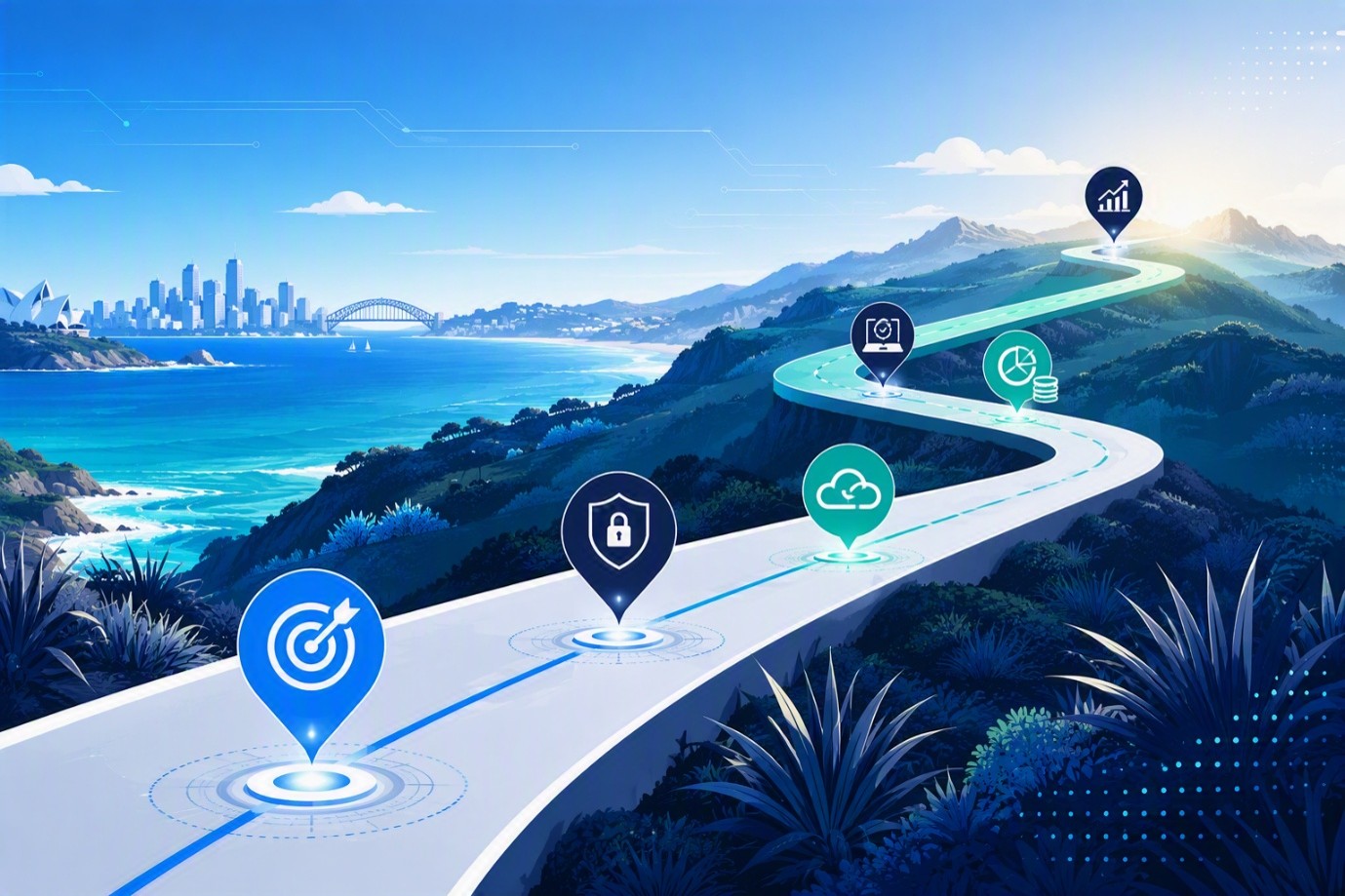
Embarking on a digital transformation journey requires a well-thought-out roadmap that outlines the steps needed to integrate new technologies into your business. This begins with a thorough assessment of your current processes and systems, identifying areas where digital upgrades can have the most impact. The next phase involves setting clear, measurable goals and aligning them with your overall business strategy. Prioritising initiatives that offer quick wins can help build momentum and secure buy-in from stakeholders. Throughout this journey, it’s important to remain agile, adapting to new discoveries and changes in the market. Regularly reviewing progress against your goals and being prepared to pivot when necessary is crucial. By following a structured roadmap, businesses can navigate the complexities of digital transformation with confidence and clarity, ensuring they emerge more resilient and competitive.
The Power of Preparedness in Digital Transformation
Preparedness is a key factor in successfully navigating digital transformation. It involves anticipating challenges and equipping your organisation with the tools and skills necessary to overcome them. A crucial aspect of preparedness is ensuring your team is ready for change, which includes providing adequate training on new systems and technologies. It also means having a solid change management plan in place to address any resistance and to foster a culture of innovation. Risk assessment is another important component, helping to identify potential barriers and creating strategies to mitigate them. By being prepared, businesses can handle the disruptions that come with digital transformation, allowing them to take advantage of new opportunities quickly and efficiently. This level of readiness ensures that digital transformation initiatives are not only implemented but sustained over time, driving long-term business success.
Unlocking Your Business Potential in the Digital Era
In the digital era, unlocking your business’s full potential means embracing the transformative power of technology. It’s about reimagining what your business can achieve by leveraging digital tools to create new value and drive innovation. This could involve developing new business models, entering untapped markets, or offering enhanced experiences to your customers. The key is to stay focused on your core business objectives while being open to the vast possibilities that digital technologies provide. Use data analytics to make informed decisions, automate where possible to increase efficiency, and remain customer-centric in every digital initiative you undertake. By doing so, you will not only streamline your operations but also build a stronger connection with your customers. In this way, the digital transformation journey is not just about survival; it’s about thriving in a constantly evolving business landscape.